
Identity Photos
Keep one person's face across arbitrary prompts, scenes, and poses. Give mold a reference photograph and it conditions the render on that person's identity; this is PuLID, running natively in Rust, on both FLUX and SDXL with a different adapter for each.
mold run flux-dev:q4 "a candid photograph of a person on a beach at sunset" \
  --id-image ~/photos/portrait.jpg

mold run sdxl-base:fp16 "a candid photograph of a person on a beach at sunset" \
  --id-image ~/photos/portrait.jpg
Generated examples
The two outputs below use the same synthetic reference portrait. PuLID keeps the face recognizable while the prompt changes the setting, wardrobe, pose, lighting, and photographic treatment.
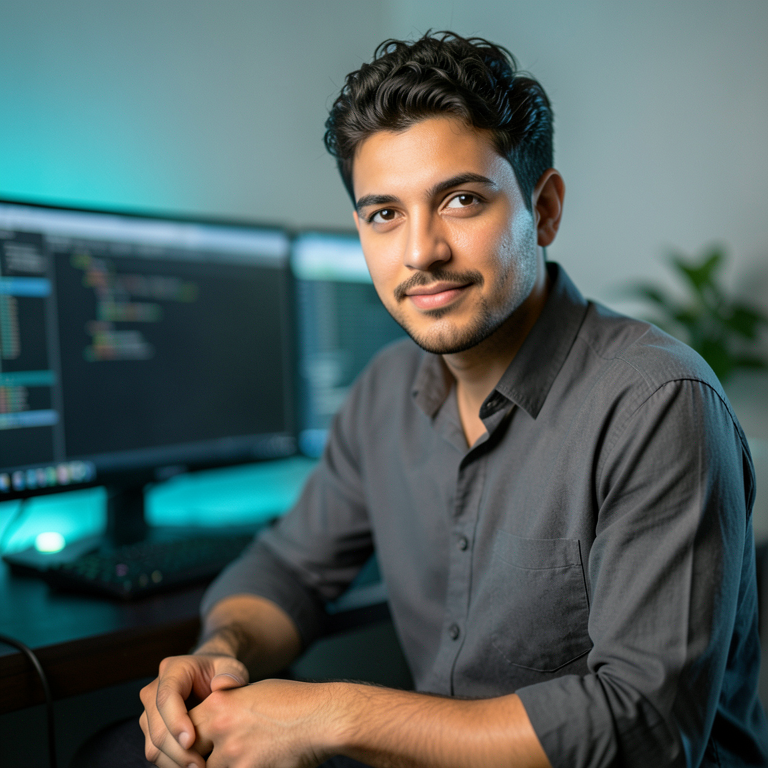
Reference portrait: a front-facing, evenly lit face with no obstruction.

flux-dev:q4 + PuLID-FLUX v0.9.1: 1024x1024, 25 steps, --id-weight 0.85, seed 83120.
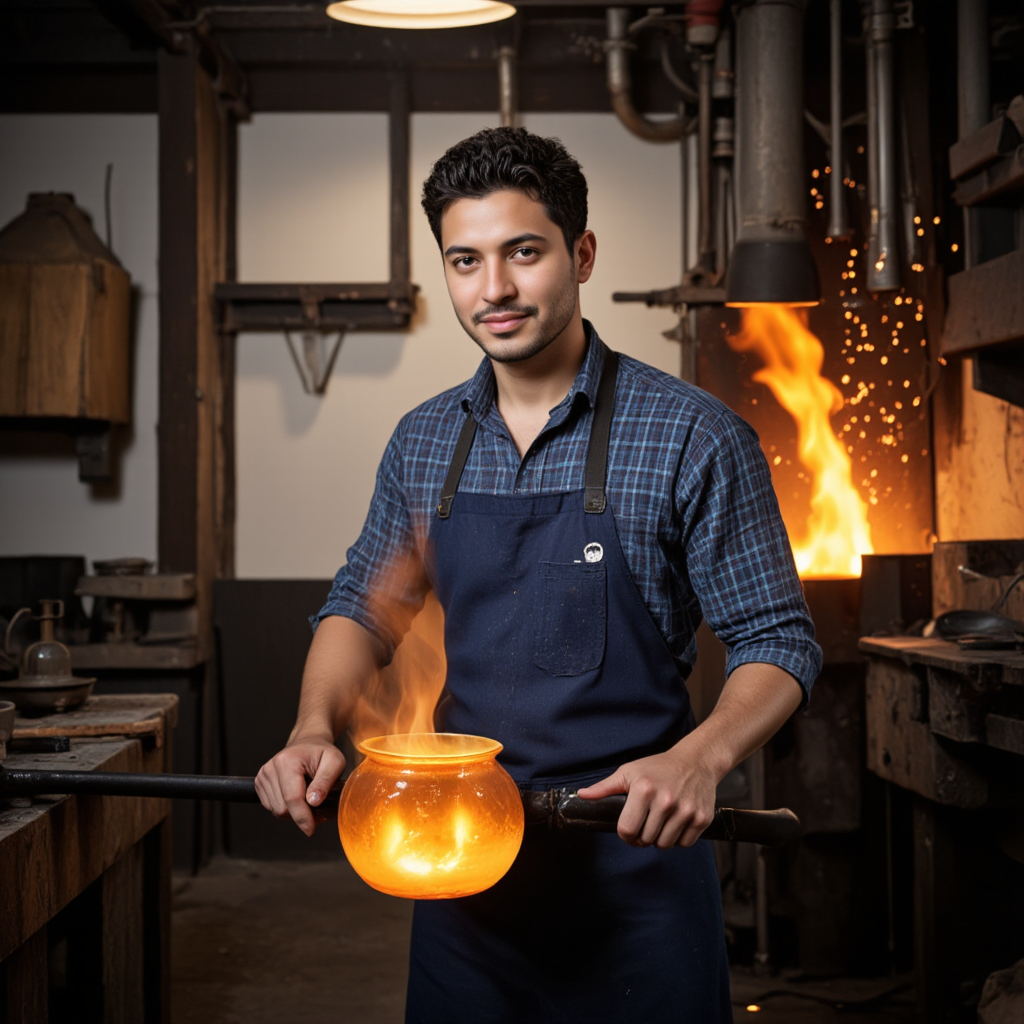
jibmix-flux:fp8 + PuLID-FLUX v0.9.1: 1024x1024, 25 steps, --id-weight 0.8, seed 83122.
License
The face detector and recognizer are InsightFace pretrained models, which are licensed for non-commercial research purposes only. Mold does not bundle them and will not download them until you have explicitly accepted those terms. The checkpoints identity conditions (FLUX.1-dev under the FLUX.1-dev Non-Commercial License, the qualified SDXL checkpoints under their own respective licenses) are separate from this gate. See Licenses below.
Which models
Qualification is family-wide, with one exception. Every FLUX.1 checkpoint takes PuLID-FLUX v0.9.1; every SDXL checkpoint except sdxl-turbo:fp16 takes PuLID v1.1. Qualification is derived from the manifest family, so a new FLUX or SDXL entry inherits it automatically.
| Checkpoint | Family | Bundle | Adapter |
|---|---|---|---|
| Any FLUX.1 checkpoint | FLUX | pulid-flux | PuLID-FLUX v0.9.1 |
Any SDXL checkpoint except sdxl-turbo:fp16 | SDXL | pulid-sdxl | PuLID v1.1 |
sdxl-turbo:fp16 is the sole exclusion — PuLID v1.1's release note reports degraded behaviour on the distilled Turbo base. Everything else routed through mold's standard SDXL UNet loads the same adapter, playground-v2.5:fp16, pony-v6:fp16, and cyberrealistic-pony:fp16 included.
The live, authoritative answer is always the server's own GET /api/models[].supports_identity; the rule above is a convenience, not a second source of truth, and a client should read that field rather than restate it.
Setup
Identity conditioning needs three things.
1. A binary built with the pulid feature. Every official release has it; the Nix packages, the AUR source packages, and the release tarballs. If you built from source yourself:
cargo build --release -p mold-ai --features cuda,flash-attn,pulid # or metal,pulidprotoc must be on PATH at build time (nix develop provides it; otherwise protobuf-compiler / brew install protobuf).
2. A qualified checkpoint. See Which models above. Every other checkpoint refuses the request rather than render it without the face.
mold pull flux-dev:q4
mold pull sdxl-base:fp16
3. The matching PuLID bundle. pulid-flux and pulid-sdxl are two files-only bundles that share one pulid family, one storage root, and four of their five files; the face detector, recognizer, parser, and vision tower are identical downloads either way, so a machine that already has one bundle pulls only the other's adapter (about 984 MB for pulid-sdxl, ~1.14 GB for pulid-flux; ~3.3 GB total for both from a clean machine):
mold pull pulid-flux --accept-license insightface-antelopev2
mold pull pulid-sdxl --accept-license insightface-antelopev2
Without --accept-license, the pull prints the terms and stops. That is deliberate: mold will not accept a third-party licence on your behalf. The acceptance covers both bundles; accept it once and either mold pull proceeds.
mold licenses lists what you have accepted on this machine. Acceptance is recorded per machine, in $MOLD_HOME; a remote server needs its own.
Usage
--id-weight and --id-start-step mean the same thing on both families.
# FLUX
mold run flux-dev:q4 "an astronaut in a diner" --id-image face.jpg

# SDXL
mold run sdxl-base:fp16 "an astronaut in a diner" --id-image face.jpg
mold run juggernaut-xl:fp16 "a studio portrait" --id-image face.jpg --id-weight 0.8

# Several references of the same person, averaged into one identity
mold run flux-dev:q4 "a chef in a kitchen" \
  --id-image front.jpg --id-image side.jpg --id-image smiling.jpg

# Weaker identity, more prompt freedom
mold run flux-dev:q4 "a Renaissance oil portrait" --id-image face.jpg --id-weight 0.6

# True CFG (FLUX only): a real negative branch instead of FLUX's distilled guidance
mold run flux-dev:q4 "a hiker on a ridge" --id-image face.jpg \
  --true-cfg 2.0 --guidance 1.0 --negative-prompt "blurry, cartoon"

# SDXL takes an ordinary negative prompt with no extra flag
mold run sdxl-base:fp16 "a hiker on a ridge" --id-image face.jpg \
  --negative-prompt "blurry, cartoon"

# Let the composition settle first, then apply the face
mold run flux-dev:q4 "a hiker on a ridge" --id-image face.jpg --id-start-step 4

# Remote: the paired server holds the bundle, you send the photograph
mold run flux-dev:q4 "a chef in a kitchen" --id-image face.jpg --host workstation
Flags
| Flag | Default | Meaning |
|---|---|---|
--id-image | -- | Reference photograph. PNG or JPEG; larger safe originals are automatically fitted to 16 MiB, 8192 px per axis, 32 MP. Repeatable, up to 4 times. |
--id-weight | 1.0 | Identity strength, 0.0–3.0. Around 0.6–0.8 trades likeness for prompt adherence; above 1.2 starts to look waxy. |
--id-start-step | 0 | First denoise step identity is applied from. Must be below --steps. |
--true-cfg | 1.0 | FLUX only. True classifier-free guidance scale, 1.0–10.0. 1.0 is off. Requires --id-image. Refused on SDXL. |
--cfg-start-step | 1 | FLUX only. First denoise step the true-CFG negative branch runs at. Must be below --steps. Requires --true-cfg. |
--id-weight 0 is completely inert. Nothing is pulled, decoded, loaded, or extracted, and the render is byte-identical to the same seed with no identity flags at all, on either family. That is the falsification case: if the two differ, the injection is doing something it should not be.
Several photographs
Repeat --id-image (up to four times) to give mold more than one reference of the same person. Each photograph is run through the whole pipeline independently and the resulting identity tokens are averaged, which is how PuLID_ComfyUI combines references. Two or three photographs from different angles usually hold the likeness better across poses than one does. This works identically on FLUX and SDXL.
The whole set has budgets of its own beside the per-photograph ones: at most 4 images, 32 MiB of encoded bytes, and 64 MP in total. A photograph with no detectable face refuses the whole request and names which one; dropping it silently would change the face that renders with nothing to show for it.
Averaging is order-independent, but the saved provenance records every photograph's name and SHA-256 in the order you gave them.
True CFG (FLUX only)
FLUX.1-dev is guidance-distilled: it runs a single forward per step and --guidance steers it without a real negative branch, which is why --negative-prompt normally does nothing on FLUX. --true-cfg restores actual classifier-free guidance for identity renders; from --cfg-start-step onwards, each step also runs a second forward over your negative prompt and the unconditional identity, and the two predictions are combined.
Upstream's own advice, which mold follows rather than enforces: when you turn true CFG on, drop --guidance to 1.0. Leaving the distilled guidance high while a real CFG scale is also applied stacks two guidance mechanisms.
It costs close to twice the denoise time, with two forwards per step instead of one, and about 150 MB of extra VRAM, which admission charges before the render is accepted rather than discovering mid-denoise.
--true-cfg 1.0 is inert in exactly the way --id-weight 0 is: the branch is never constructed and the render is bit-identical to one that never named it.
SDXL never has this problem. SDXL is not guidance-distilled; its ordinary --guidance already is the classifier-free scale, and --negative-prompt always works, with no flag needed. Naming --true-cfg or --cfg-start-step on an SDXL identity request is refused rather than silently ignored, because accepting them would either mean nothing or double the guidance the render already performs. PuLID's SDXL adapter conditions its negative branch on the unconditional identity automatically, with no separate control.
Older servers
Both several photographs and true CFG are additive request fields, and a server that predates them does not reject them; it ignores them. Sending several photographs to such a server would render with no face at all; sending --true-cfg would render the ordinary distilled path with no negative branch. Neither would tell you.
So mold run asks first. When the render target does not advertise capabilities.identity, the request is refused by name rather than submitted:
$ mold run flux-dev:q4 "a chef" --id-image a.jpg --id-image b.jpg
error: http://gpu-box:7680 does not support more than one identity photograph,
       and sending several to it would render with no face at all. Use a single
       --id-image, or upgrade that server.
A single --id-image needs no such check (every identity-capable server has always understood it, on either family) and --local is unaffected. If the server cannot be reached at all, nothing is refused: the ordinary local fallback takes over, and both shapes work in full there. A server that is reachable but cannot answer the check is treated as not supporting them, because that is exactly how an older one behaves.
Choosing a photograph
- One clearly visible face, looking roughly at the camera. If several faces are found, mold conditions on the largest and says so.
- A tight crop is not required; mold detects and aligns the face itself.
- Phone photographs are fine: EXIF orientation and embedded colour profiles are both honoured.
- Resolution beyond about 1024 px buys nothing; the face is resampled to 512 px.
What actually happens
Extraction is identical for both families; the same detector, recognizer, parser, vision tower, and IDFormer produce the same shape of 32 identity tokens. Only the injection into the image model differs:
your photograph
      |  SCRFD detects the face and five landmarks       (GPU)
      |  ArcFace embeds the aligned 112x112 crop         (GPU)
      |  BiSeNet segments the aligned 512x512 crop       (GPU)
      |    background -> white, face -> greyscale
      |  EVA02-CLIP-L-14-336 encodes that masked crop    (GPU)
      |  IDFormer resamples both into 32 identity tokens (GPU)
      v
  [32 x 2048] identity
      |
      |  FLUX: 20 cross-attention modules            SDXL: 70 cross-attention
      |  injected between the transformer's           modules injected into the
      |  double-/single-stream blocks (GPU)            UNet's attn2 layers      (GPU)
      v
   your print
The mask is not a background removal: the face is greyscaled too, so the vision tower sees shape and no colour at all. That is what PuLID was trained against, and skipping it costs about a thousandfold in how closely the extracted identity matches the reference implementation.
What differs between the families
| FLUX | SDXL | |
|---|---|---|
| Adapter file | pulid_flux_v0.9.1.safetensors | pulid_v1.1.safetensors |
| Injection point | 20 modules between transformer double-/single-stream blocks | 70 attn2 cross-attention modules across the UNet |
--guidance | distilled conditioning scalar | the classifier-free scale |
--true-cfg / --cfg-start-step | supported | refused |
--negative-prompt | only takes effect with --true-cfg | always active |
| Extra VRAM | ~1.25 GB | ~850 MB |
When it runs, and what it costs
Everything up to the 32 tokens runs once per request, on the same GPU that will render the print, as the first thing that GPU does, before the checkpoint is even loaded. A batch of eight siblings extracts the face once and all eight reuse the identical value.
It is deliberately over before the render begins. The detector, the recognizer, the parser, the vision tower, and the IDFormer are each built, run, and fully released in turn, so none of them is ever resident beside the checkpoint or beside the identity adapter. Mold shows it as its own Extracting face identity stage, and the queue learns how long it takes on your hardware and includes it in the time estimates it shows you.
Measured on an Apple M4 Max, one extraction is about 0.4 s on the GPU and about 1.9 s on a CPU-only host; on an NVIDIA L40S it is about 0.6 s, against 6 s on that machine's CPU. Rendering the same face again within a session is under 2 ms; the identity is cached in memory, keyed on the photograph, the family, and every model file involved, so a repaired or updated bundle never serves a stale face, and one photograph never serves one family the other's embedding. Nothing is written to disk: a face embedding is biometric data, and mold keeps it only for as long as the server runs.
On the GPU, identity costs extra VRAM beside the checkpoint (about 1.25 GB on FLUX (the adapter's twenty cross-attention modules plus their activations) and about 850 MB on SDXL (its seventy, smaller modules)) and roughly 10% of denoise time. The extraction itself needs about 0.7 GB more while it runs, which mold reserves for you when the job is queued and releases before the checkpoint loads.
Provenance
A print rendered with an identity records it. Saved metadata and the gallery row carry the reference photograph's file name and its SHA-256, plus the weight and start step that were applied, never the photograph itself and never your directory layout. A print made from several photographs records every name and digest in request order, and a true-CFG print records the scale and start step the branch actually ran with.
mold info ~/.mold/output/mold-flux-dev-q4-1.pngA print with no identity records no identity fields at all, so a knob on an ordinary render can never read as conditioning that did not happen.
What it combines with
A LoRA and an img2img source image both ride alongside an identity photograph, together or apart, on FLUX.1 and on SDXL. Neither pairing was ever a numerical prohibition — the adapter injects between transformer blocks on FLUX and on the cross-attention output on SDXL, underneath whatever a LoRA merged into the base weights, and an img2img render simply starts further into the schedule.
--id-start-step counts against the full --steps schedule whether or not a source image truncates it, so the same number means the same thing in both cases.
Limitations
Each of these is refused with a specific message rather than silently rendered, on both families:
Qualified checkpoints only: see Which models.
Video families, Flux.2, Z-Image, Qwen-Image, SD 1.5/3.5, and Wuerstchen do not support identity at all.
True CFG needs an identity, and is FLUX only:
--true-cfgand--cfg-start-stepare qualified only alongside an active identity (a photograph and a non-zero--id-weight) on FLUX. They are refused on an ordinary FLUX render rather than accepted and ignored, and refused outright on an SDXL identity request.Older servers refuse both multi-photograph and true-CFG requests. They are gated on
GET /api/capabilities→identity; see Older servers.Multiple photographs and true CFG are CLI and API only so far. The web, desktop, iPhone, and Discord surfaces still offer a single photograph and no true-CFG control, on either family.
Removing it
mold rm pulid-flux
mold rm pulid-sdxl
Each removes its own adapter. Removing one keeps the four shared extraction artifacts (the vision tower, face detector, recognizer, and parser mold derived from them) installed for as long as the other bundle needs them. Only removing both deletes those shared files too. Your recorded licence acceptance stays either way; mold licenses shows it, and it is what lets a later mold pull pulid-flux or mold pull pulid-sdxl proceed without the flag.
Licenses
| Artifact | License |
|---|---|
pulid_flux_v0.9.1.safetensors | Apache-2.0 (guozinan/PuLID) |
pulid_v1.1.safetensors | Apache-2.0 (guozinan/PuLID) |
EVA02_CLIP_L_336_psz14_s6B.pt | MIT (QuanSun/EVA-CLIP) |
scrfd_10g_bnkps.onnx, glintr100.onnx | InsightFace pretrained models; non-commercial research only |
parsing_bisenet.pth | MIT (facexlib) |
flux-dev:q4 / flux-dev:q8 | FLUX.1-dev Non-Commercial License |
Any SDXL checkpoint except sdxl-turbo:fp16 | Each checkpoint's own license; see the model catalog |
Mold ships none of these; it downloads them on request, and refuses the InsightFace pair until acceptance is recorded. The InsightFace code is MIT; the weights are not, and that distinction is the reason for the gate.
Troubleshooting
"this server was built without PuLID face-identity support": the binary does not link the feature. Use an official release, or rebuild with --features …,pulid.
"no face was detected in the identity image": the detector found nothing above its threshold. Try a photograph where the face is larger, better lit, or closer to frontal.
"does not support face-identity conditioning": the model is not one of the qualified checkpoints in Which models.
"identity photo 2 of 3: no face was detected": one photograph of a set is unusable. The number is the position you gave it in.
"id_image and id_images are the same field in two shapes": an API client sent both. Put every photograph in id_images, or a single one in id_image.
"true_cfg and cfg_start_step are qualified only alongside active face-identity conditioning": --true-cfg was used without --id-image, or with --id-weight 0, on FLUX.
"true_cfg and cfg_start_step apply only to guidance-distilled FLUX identity renders": --true-cfg was used against an SDXL identity request. Drop it; SDXL's --guidance is already the classifier-free scale.
"no PuLID bundle resolved": run mold pull pulid-flux (for FLUX) or mold pull pulid-sdxl (for SDXL) with --accept-license insightface-antelopev2 on the machine that renders, which for a remote run is the server, not your laptop.